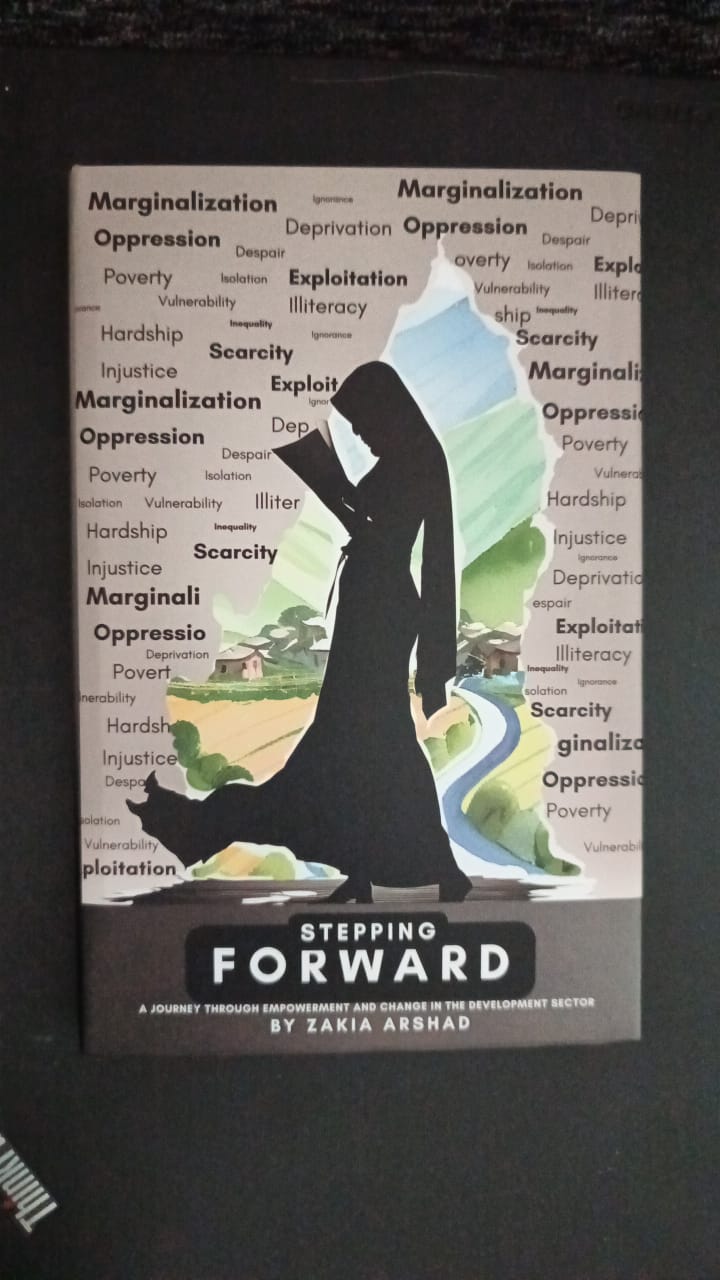


Stepping Forward is a unique book. It’s very different from anything I’ve read before. I don’t typically read a lot of nonfiction because I’m much more of a fiction and fantasy girl. I love romance, different worlds, magic, adventure, and history. In fact, most of the nonfiction I’ve read has been history. I love reading about kings, knights, and Chinese emperors because those stories have always fascinated me.
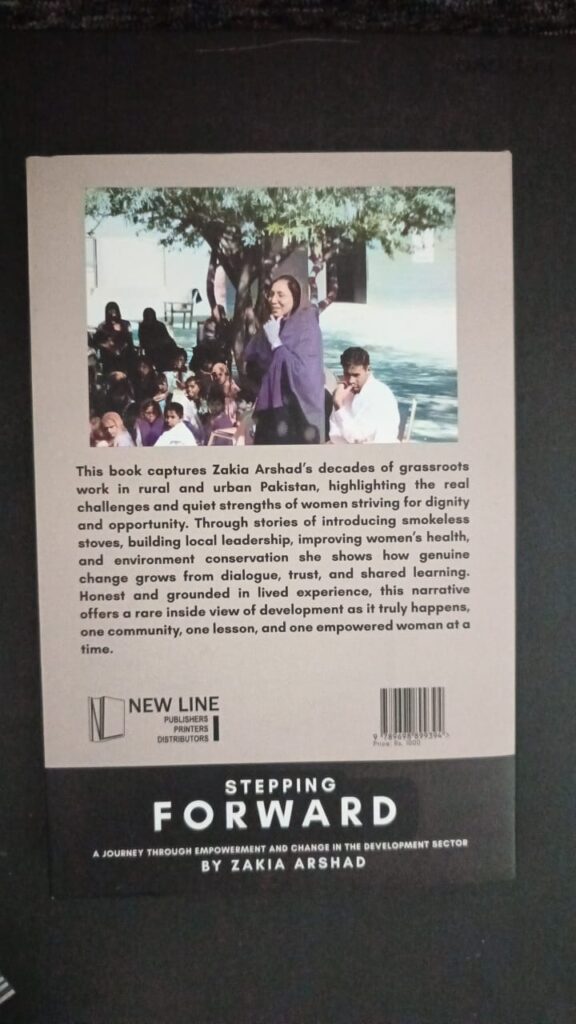
This book is especially close to my heart because I was the one who designed the title cover. I collaborated with Ms. Zakia Arshad and my mother, Samina, who is the editor of this book, to create the cover design.
Since I created the cover, I wanted to read the book once it was finished. After reading it, I decided to write this review.
About the Author
Zakia Arshad is a Pakistani social development practitioner who has dedicated decades of her life to working with marginalized communities, particularly women and children. Throughout her career, she has been involved in numerous grassroots development projects, including initiatives focused on health, education, women’s empowerment, and environmentally friendly technologies. Stepping Forward is a reflection on her lifelong journey of service, documenting the people, projects, and experiences that shaped her work.
Book Summary
Stepping Forward is a memoir that chronicles Zakia Arshad’s decades of work in Pakistan’s development sector. Through stories from villages, communities, and development projects across the country, she shares the challenges, successes, and lessons she encountered while working with grassroots organizations. The book combines personal memories with practical insights into community development, offering readers an insider’s perspective on Pakistan’s social landscape and the realities of development work.
My Thoughts
Things I Liked
There were many things I enjoyed about this book.
I really liked reading about the different grassroots projects that Ms. Zakia carried out throughout her life, especially initiatives like the Moodle games that she used to help people. I also enjoyed reading about how she travelled to different villages and met so many people throughout her career. It was very inspiring.
I loved the little snapshots from different moments in her life. They made the book feel personal while also showing the bigger picture of the work she was doing.
Another thing I appreciated was the way the book was laid out. It is very clear and chronological, with each stage of her journey presented in its own section. It almost reads like a history book, documenting not only the history of Ms. Zakia’s life but also the history of the many projects she worked on. The structure makes it easy to follow and allows each project to be explored through both facts and personal stories.
I also enjoyed the photographs included throughout the book. Seeing real pictures from her life made the stories feel more grounded and helped bring the settings and people to life.
One thing I particularly appreciated was that the book doesn’t just tell stories—it also explains the methods behind the projects. I think this would be especially valuable for anyone working in the development sector. Readers can learn not only from the approaches she used but also from the obstacles, mistakes, and challenges that naturally arise during community work.
Things I Disliked
There wasn’t much that I disliked about this book.
The only thing is that I’m generally not a huge fan of nonfiction, so I occasionally found myself slowing down during some of the more detailed explanations. However, I think that’s more about my personal reading preferences than the book itself. Overall, I still found it informative, engaging, and worthwhile.
Final Verdict
Overall, Stepping Forward is a book I would recommend to anyone interested in the development sector or in Pakistan’s social history. It offers a very intimate perspective on the country through the eyes of someone who spent decades working within communities, rather than observing them from the outside.
If you’re looking for a memoir that combines personal experiences with practical lessons in grassroots development, this book is definitely worth reading.
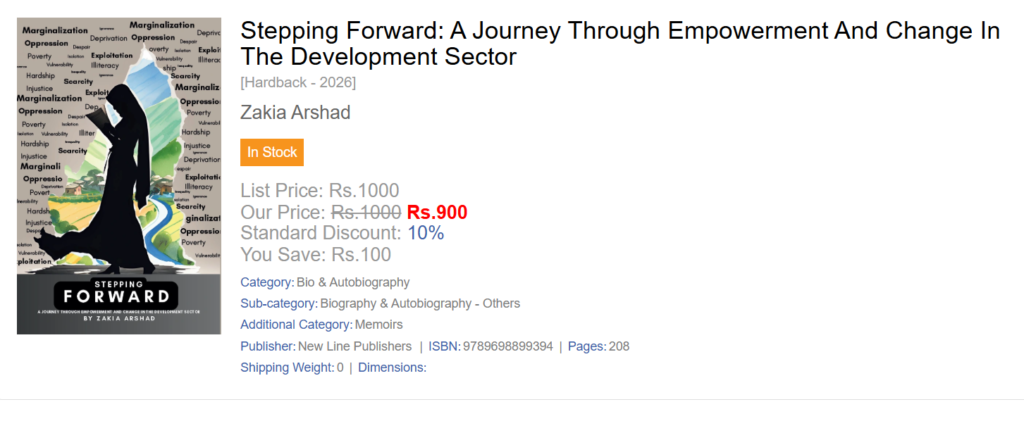
You can get it here.














Leave a Reply